Quote management inside small and medium service businesses is structurally inefficient. Companies routinely dedicate an entire administrative headcount — often three to four people — to a purely repetitive, low-value task: reading a request, checking a price list, and typing out a document.
That model carries three concrete costs. A rigid cost structure: salaries and overheads for data entry weigh on margins, especially when demand slows down. A risk of human error: manual entry produces miscalculations, omissions and delays that hurt conversion rates. And slow response times, in a market where speed is often the deciding factor for a client choosing between suppliers.
Quotify turns that fixed cost center into a variable, scalable one. An AI model trained on the business owner's own logic reads incoming requests, drafts a quote, and hands it back for a final human check — running 24/7, at a near-zero error rate.
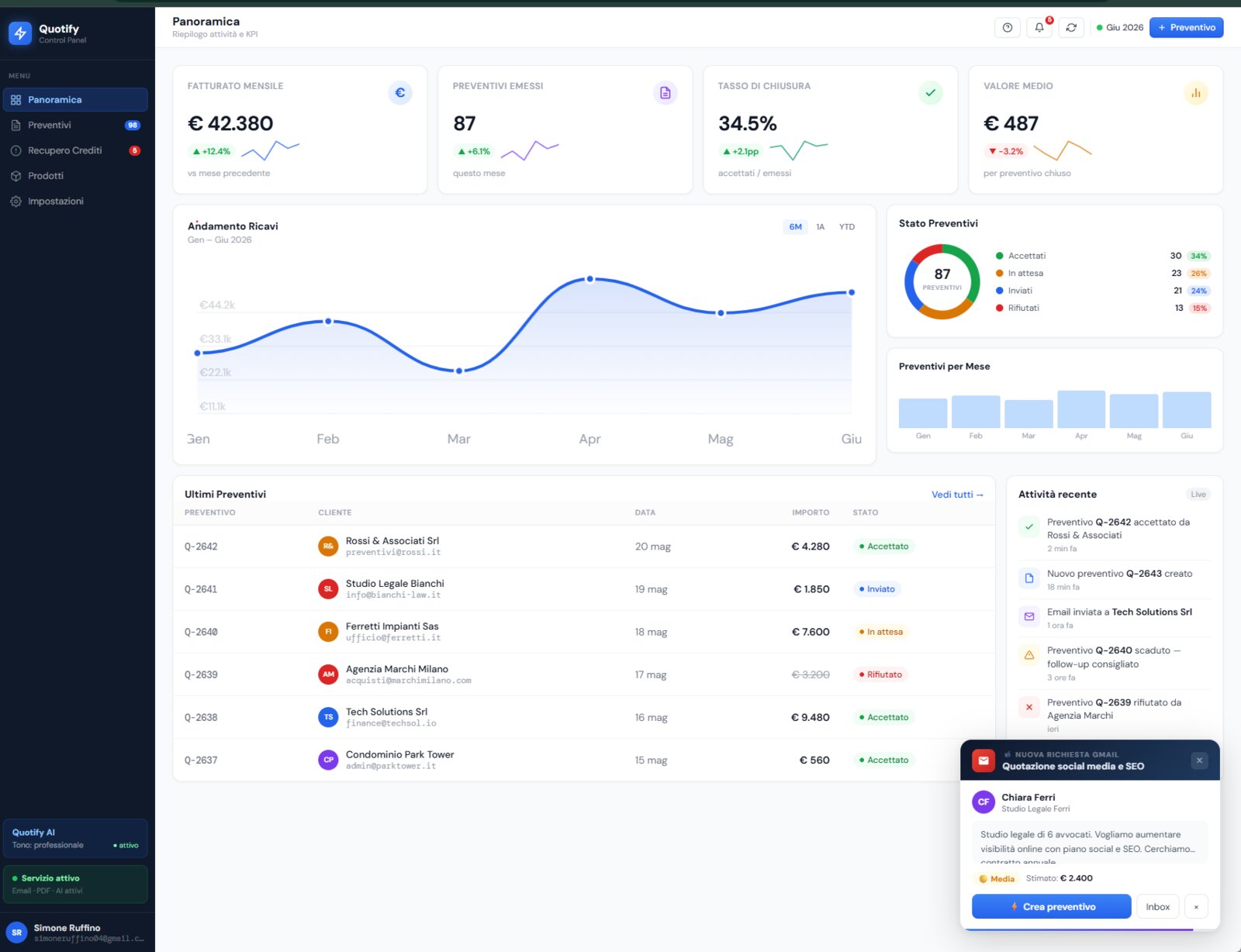
Three modules, one lifecycle
The platform is built around the full customer lifecycle, from the first email to the final payment.
1. Executive dashboard
A real-time view of the business: revenue trend, quotes issued, close rate, average deal size, and a live feed of what the AI agent is doing in the background.
2. AI-powered quoting engine
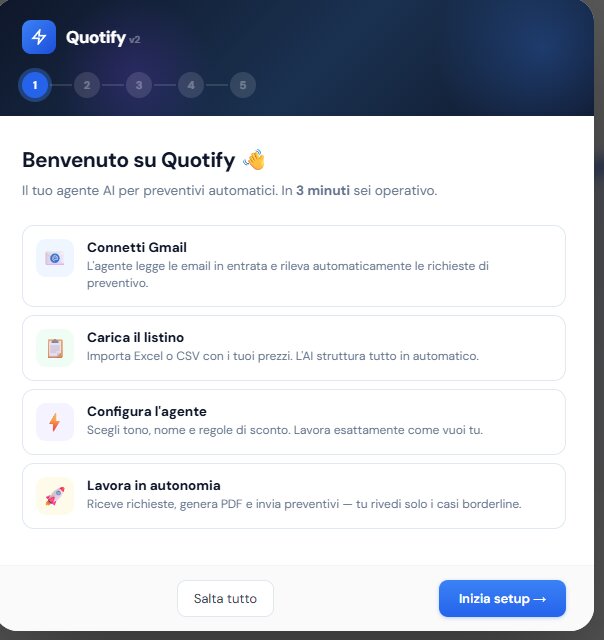
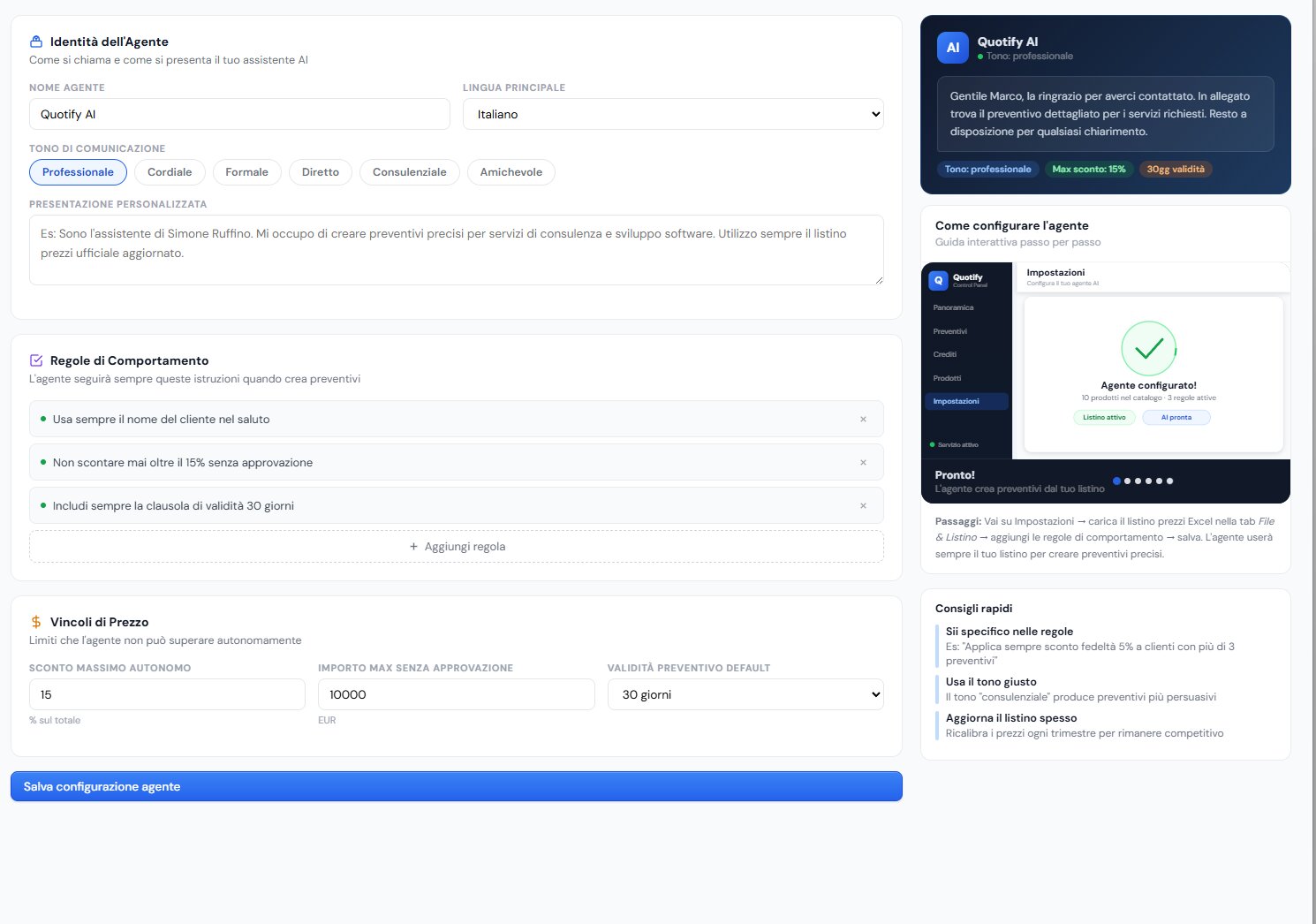
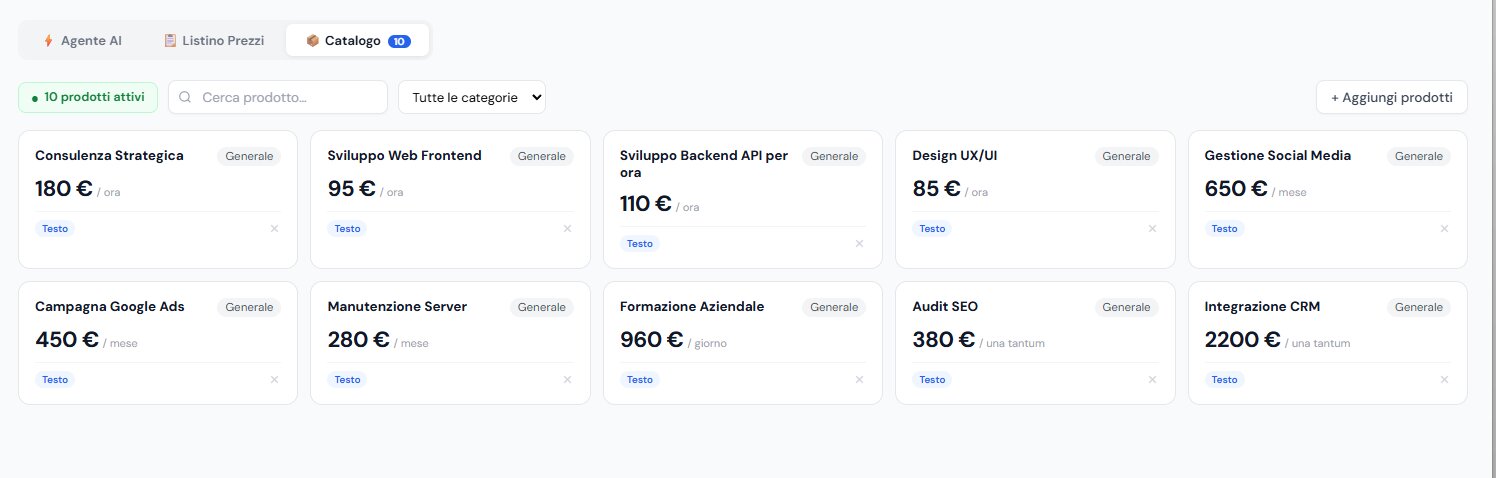
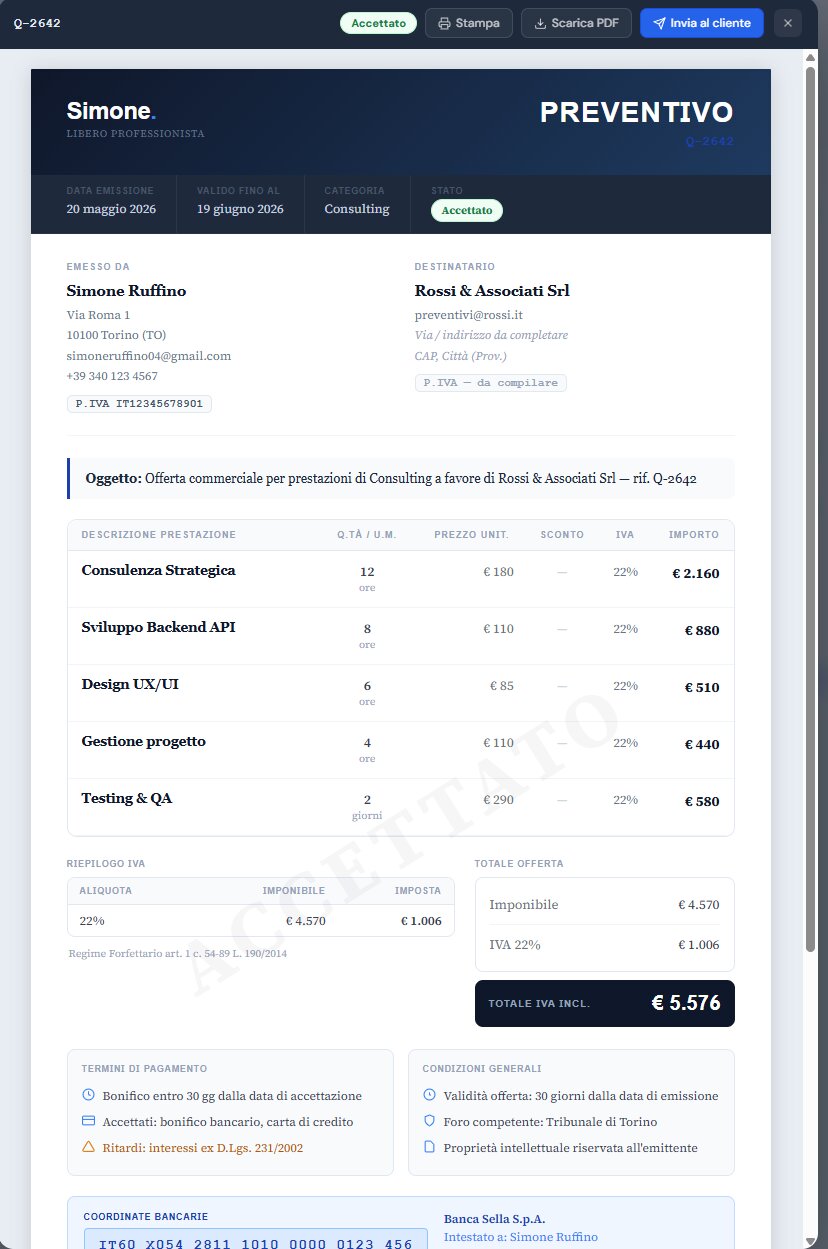
The system reads incoming emails, extracts the relevant data and understands the nature of the request, then compiles a draft quote against the business's own price list and rules. The owner reviews it, adjusts discounts or line items if needed, and authorizes the send — human-in-the-loop by design, not an autonomous black box.

3. Receivables and cash flow
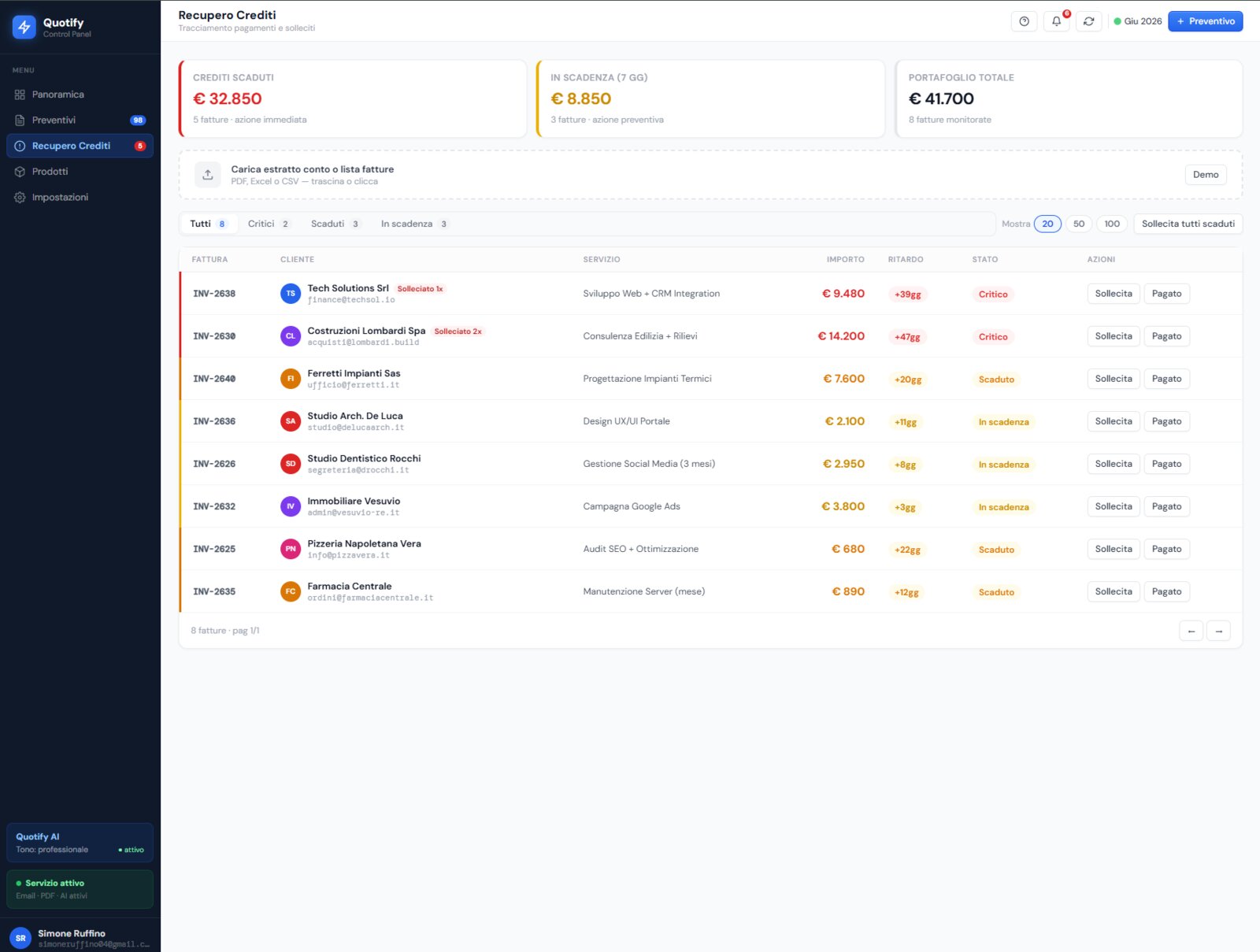
Once a quote is accepted, the platform tracks payment deadlines, flags overdue invoices, and can trigger automated, tone-adjustable dunning sequences instead of a manual chase.
Built lean
The product was built with a lean approach, prioritizing iteration speed over premature architecture. The stack is versioned and documented on GitHub, and a large part of the implementation was carried out with Claude Code — which cut the time and cost normally associated with building this kind of software from scratch.
Where it actually fits — and where it doesn't
The honest limitation of the current version is the addressable market. The engine works best where pricing is rigidly parametric: surface-based models (cleaning, landscaping — price × square meters) or time/asset-based models (vehicle and equipment rental — daily rate × days × units). These are high-volume, simple-request businesses where speed matters more than nuance.
Validation interviews with a healthcare provider and two HVAC/plumbing firms exposed the boundary clearly: neither plumbing company could adopt the tool, because their quoting isn't static. Installing a boiler requires an on-site technical assessment — pipes, flues, unpredictable labor hours — variables a rigid, multiplier-based engine can't absorb. Onboarding friction was the second issue: letting a non-technical business owner configure the tool independently still requires a much simpler interface than the current one.
What this taught me
Three lessons stand out from pushing this project past its academic origin and toward a real commercial attempt.
Technological validity and market adoption are not the same thing.
A working, technically sound system doesn't automatically become a sellable product. The gap between the two is closed by usability and onboarding, not by more features. The real constraint we ran into was simple: would a 45-to-55-year-old business owner actually download the software, generate an API key, and import their price list? If the honest answer is "probably not," the technology doesn't matter yet.
A business-background founder has a structural ceiling.
AI-assisted development lets someone with an economics and business background prototype fast, validate logic, and ship an MVP alone. But scaling the platform, managing complex relational databases, and guaranteeing data security is a different job. Without a technical co-founder, that becomes a hard bottleneck — one that slows development and puts the product's stability at risk.
You can't design for a B2B market you haven't worked inside of.
This is the lesson I take most seriously. We theorized a problem — quoting inefficiency — and built a solution without ever having lived, day to day, inside the specific sectors we were targeting. Without that direct field experience, you miss the micro-frictions and exceptions that actually run those businesses. The risk is building a product that's perfect for an idealized case and unusable in the market it was meant for.